eCommerce Platforms · D2C eCommerce
D2C eCommerce development
We build direct-to-consumer stores for brands: editorial storefronts that carry the brand, a fast checkout that converts and AI content workflows inside from day one. Fixed scope, fixed price, typical launch in 8 to 12 weeks.



What is D2C eCommerce?
D2C (direct-to-consumer) means a brand sells to customers through its own store instead of relying on marketplaces and retailers. The margin that used to feed intermediaries stays with the brand, and so do the two assets that compound over time: customer relationships and first-party data.
The trade-off is responsibility: the brand now owns the storefront experience, the checkout, the logistics promise and the content operations. A D2C build is the engineering answer to that responsibility: a store that carries the brand, converts the traffic you pay for and turns first purchases into repeat ones.
The three numbers a D2C store works for
Every design decision in the build maps to one of them. If a feature moves none, it does not make the scope.
Conversion rate
CR
An editorial storefront and a checkout tuned to local payment habits: fewer steps, fewer surprises, more completed carts.
Average order value
AOV
Bundles, collection edits and recommendations built on clean product data, not on a plugin guessing.
Repeat purchase
LTV
Cohort analytics, e-mail feeds and campaign sections your team ships weekly without a developer.
A D2C store you own or a SaaS template?
Templates are a fine start. These are the differences that decide whether the store still serves the brand two years in.
Validating a first product? Start on SaaS, honestly. Come back when the brand outgrows the template; the Blueprint will tell you if it has.
D2C eCommerce
D2C is a margin game, the store has to play it
Selling direct means you own the customer, the data and the margin, if the store holds its end. That takes three things working together: a storefront that carries the brand instead of a theme, a checkout tuned for your market’s payment habits, and content operations that keep campaigns moving without a developer in the loop.
We design D2C builds around repeat purchase, not just first conversion: clean product data for personalisation, e-mail and channel feeds from the same catalog, and analytics that show cohort behaviour instead of vanity traffic. The store becomes an asset that compounds, not a template you replace next year.
What we deliver
Campaigns
this weekSessions
48 210
CR
3.8%
Returning
31%
How we do it
A D2C build, week by week
A typical D2C launch closes in 8 to 12 weeks. This is the standard shape; your Blueprint makes it exact.
Week 0
Blueprint
Brand direction for the storefront, the product data model, payment and logistics choices, a fixed quote.
Weeks 1–2
Foundation
Environments and the commerce core with your real catalog imported; the data model starts feeding filters and feeds.
Weeks 3–5
Editorial storefront
Campaign sections, collections, lookbooks and product pages, built as blocks your team edits from the admin.
Weeks 6–7
Checkout and automation
Local payments, one-click flows, transactional e-mails and AI content workflows for descriptions and translations.
Weeks 8–9
Launch
Content load, QA on real devices, a performance pass and go-live with hypercare; then Maintenance & Growth.
Who a custom D2C build is for, and who it is not for
A good fit when
- The brand has repeatable sales and has outgrown its template: campaigns wait on developers, fees grow with revenue
- Editorial and the buying experience are part of the advantage, and a template flattens what the brand does best
- You are playing for LTV: subscriptions, repeat purchase and first-party data have a real plan
A poor fit when
- It is a first product with unvalidated demand; a SaaS template will test the hypothesis cheaper
- The store is an add-on to marketplace sales and nobody will run its content
- The budget ends at the build: a D2C store grows through campaigns and iteration, not launch alone
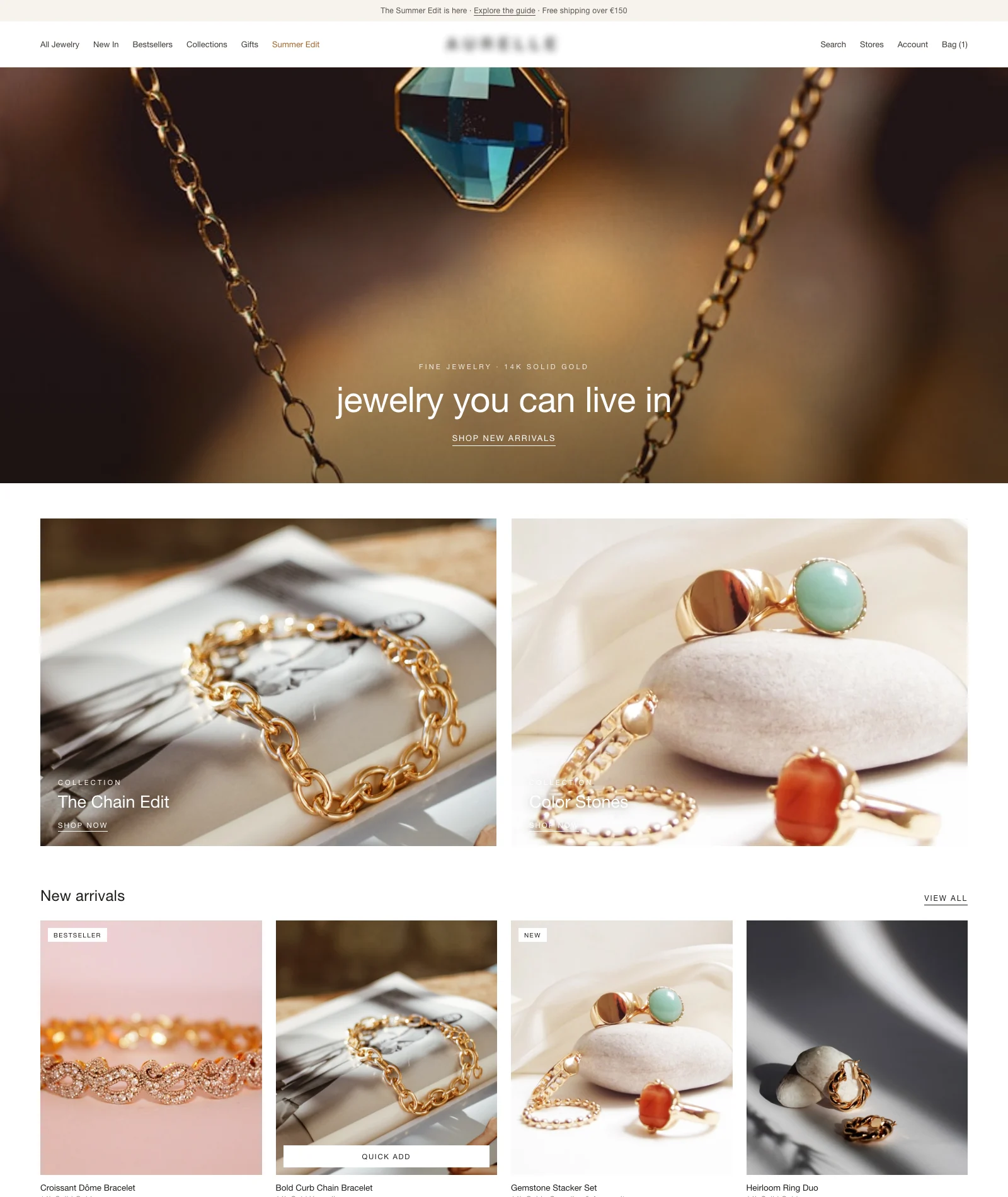 See it in practiceFrom a blocked SaaS store to an AI-native commerce platform9 weeks · from workshop to launch
FAQ
D2C eCommerce development
Can the store handle drops and campaign spikes?
Yes, the storefront is edge-rendered and cached, so a campaign spike is a caching event, not an outage. Drops get scheduled sections your team publishes without a deploy.
Do you also design the brand identity?
We design the storefront within your existing identity. If the identity itself needs work, we tell you honestly in the Blueprint and scope it with a partner.
How is this different from a Shopify template?
The storefront is designed for your brand, not themed, and the platform is yours: no revenue fees, no plugin ceilings, integrations shaped to your operations.
Can we run campaigns without a developer?
Yes, campaign sections, collection edits and content blocks are editable from the admin. That constraint is designed in from the Blueprint.
What does a D2C build cost?
A fixed price for a defined scope, set after the Blueprint. You know the number before development starts.
Do you support subscriptions and bundles?
Yes. Subscription and bundle logic lives in the commerce core, not in a stack of plugins, so pricing, pauses and swaps follow your rules.
Which payment methods do you integrate?
The set your customers expect: BLIK, cards, Apple Pay and Google Pay, plus deferred payments where they fit the market. The Blueprint picks providers by market and fees.
Can you migrate our existing store into a D2C build?
Yes. Products, customers, order history and SEO move in a controlled migration, and sales keep running during the build. Our migration services describe the exact playbook.