Marketplace Platforms · B2B Marketplace
B2B marketplace development
We build B2B marketplaces where professional buyers meet brand partners: spec-grade catalogs, accounts for companies, and the logistics layer that makes the promise real. Our materials marketplace example build launched with 24 brands, 18,000 products and next-day sample delivery.


B2B Marketplace
In B2B marketplaces, the catalog is the product
Professional buyers do not browse, they specify. That makes data quality the whole game: normalized attributes, documents and certificates that survive scrutiny, and search that understands industry vocabulary. A B2B marketplace with consumer-grade data is a directory, not a market.
The second differentiator is workflow fit: company accounts with roles and approvals, quotes where list prices do not apply, and logistics promises a professional can plan around. Get those right and brands join for the demand, and stay for the analytics about who specifies them.
What we deliver
Analytics
last 30 daysRevenue
€96 480
How we do it
Spec-data foundation
Attribute schemas per category, document handling and normalisation workflows before any storefront polish.
Professional workflows
Company accounts, approvals, quote flows and the logistics layer that makes promises real.
Brand partner growth
Onboarding through panels, partner analytics and a pipeline for adding categories without chaos.
When it makes sense
Your industry buys through reps, PDFs and phone calls
Buyers need spec-grade data, not consumer descriptions
You can aggregate supply your competitors cannot
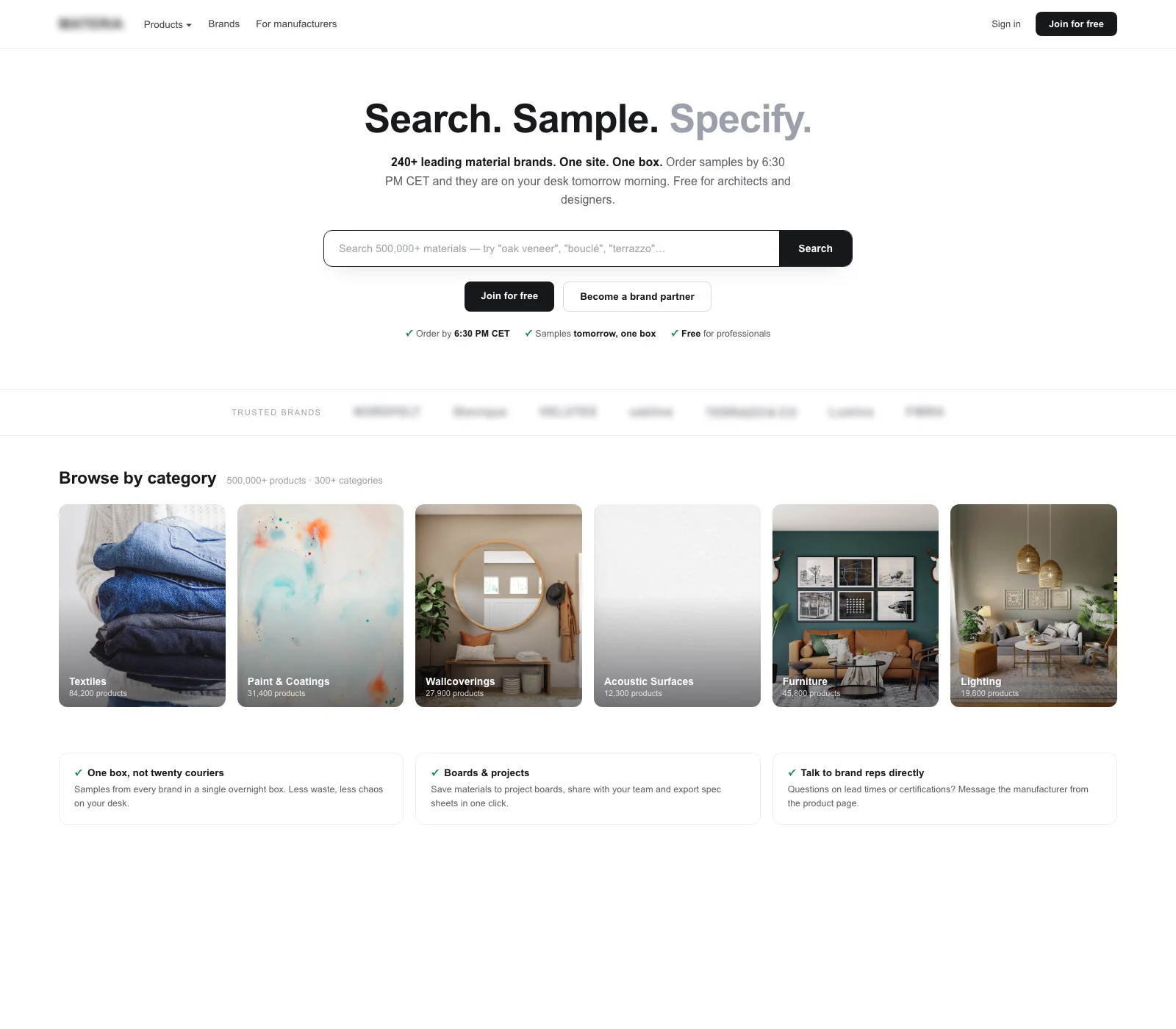 See it in practiceA samples marketplace: one search, one box, next morning10 weeks · to a live marketplace mvp
FAQ
B2B marketplace development
How is buyer verification handled?
Registration flows verify companies (registry data, domain, manual review where needed), so brands know their data and prices face professionals, not scrapers.
Can brands keep their own reps in the loop?
Yes, rep contact and inquiry routing per brand are built in; the marketplace augments existing relationships instead of cutting them out.
How is a B2B marketplace different from a consumer one?
The catalog is the hard part: professional attributes, documents and certificates that specifiers rely on. Our builds automate that normalisation so the marketplace stays trustworthy at scale.
What do brand partners get?
Their own panel, their data ownership, order flow and analytics: who specifies them, what converts. That data is often why brands join.
Can logistics like next-day samples really be built in?
Yes, our materials marketplace example runs 100% next-day sample delivery in one box. Logistics integration is scoped in the Blueprint like any other module.